
MSU spin-off venture finds success in growth
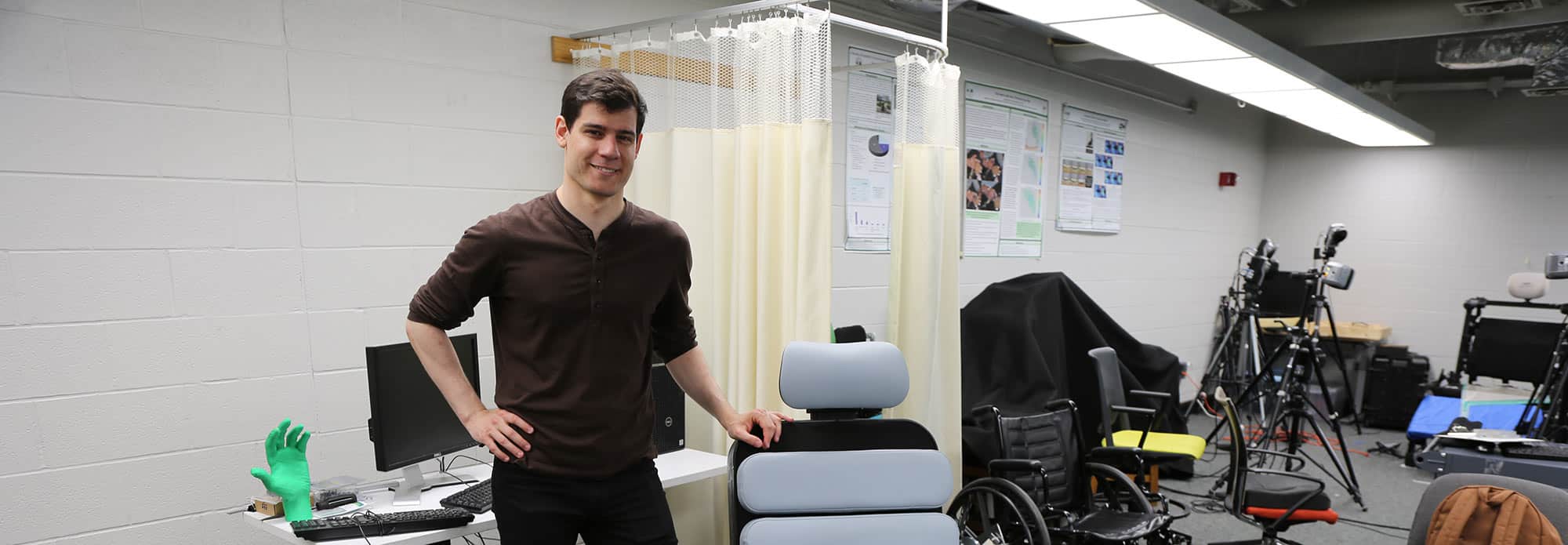
When Dr. Justin Scott began his PhD work, he didn’t know where it would take him. Majoring in mechanical engineering at Michigan State University, he knew he wanted to focus on biomechanics advancements. Then he met Dr. Tamara Bush, professor of mechanical engineering at MSU who was working on the issue of pressure sores in patients with limited mobility. He spent the next five years working to understand pressure distribution changes in people with spinal cord issues when you reposition them. From that, the team developed their initial version of the recliner that would become the Sit Sense product.
What does it take for a scientist to become an entrepreneur?
As a scientist, and not coming from an entrepreneurial background, Justin had to seek resources to help the Sit Sense team understand this new landscape. Through opportunities such as the NSF I-Corps program, Justin learned about customer discovery, product-market-fit, supply chains, manufacturing, and most importantly regulatory requirements. After determining the regulatory hurdles for a wheelchair would give investors expecting a quick return significant pause, the team decided to pivot. In 2023, the team moved their solution away from the wheelchair and toward the recliner. However, eventual development of the Sit Sense wheelchair will benefit from the data generated by the recliner.
How are science experts finding resources to support a shared vision?
As an academician, Justin recognized he had focused on his specific area of expertise, becoming highly knowledgeable in the research and application of the science in developing a solution to a problem. He realized though, that the Sit Sense team needed more. They needed experts in other, complimentary areas. Going out and meeting them can be daunting for a scientist. But it is something the team found great value in so they could continue to bring their core expertise to the project.
“There’s this whole world of other people with their own expertise and you are going to need them in order to bring your product to market.”
– Justin Scott, co-founder, Sit Sense
How does the SmartZone support tech startups?
LEAP has supported Sit Sense through helping them secure three grants: a Local Accelerator Fund award from the SmartZone and two Business Accelerator Fund awards from the MEDC, administered by the Michigan SBDC. This funding has given the fledgling company the runway to begin seeking their next rounds of funding. Since they are a startup, especially a medical assistive device startup, their product does require a lot of capital to bring their solution to market.
In addition to gaining assistance with fundraising, Sit Sense utilized the SmartZone’s entrepreneur support staff for general inquiries. Having a few different SmartZone staff to go to meant that Justin could expect to get answers to questions quickly.
Sit Sense was recently awarded a NSF SBIR grant of $1.5 million to support the development of their next recliner model which will expand the product’s ability to support occupants across a wider range of sizes.
What path do Lansing region startups need to follow?
Sit Sense’s journey is a textbook example of how a local ecosystem should support its startups. At each step, the SmartZone and other partners have been able to work alongside Sit Sense’s team to assess their ongoing needs and see where assistance can occur. When starting a business, especially a tech business, every dollar counts and every resource, whether monetary or knowledge-based, has to be carefully deployed. Sit Sense has been strategic about utilizing the various resources they have been presented with. This has led to their being able to extend their runway long enough to see significant gains such as the SBIR grant. Every contribution is important and when combined can make the difference for a fledgling lab-to-market venture.
The SmartZone is excited to see what Sit Sense’s next steps will be and expects to provide continued support to ensure this business thrives.
About LEAP
The Lansing Economic Area Partnership (LEAP) is a coalition of area leaders partnering to build a stronger community for all — working every day to grow, retain and attract business to the Lansing, Michigan, region.
About the Lansing Regional SmartZone
The Lansing Regional SmartZone (LRSZ) drives growth in the Greater Lansing region’s high-tech sector by funding local partners to deliver exceptional entrepreneurial support services. The LRSZ is a partnership between City of East Lansing, City of Lansing, East Lansing Public Schools, Ingham County, Lansing Community College, Lansing School District, Lansing Economic Area Partnership (LEAP), the Michigan Economic Development Corporation (MEDC), Michigan State University Innovation Center, and Michigan State University Research Foundation. A dynamic organization of leaders from all backgrounds and business sectors, the LRSZ has locations in downtown East Lansing at the Technology Innovation Center (TIC) and in Lansing at the MSU Health Park. LRSZ is funded by the Michigan Economic Development Corporation (MEDC).